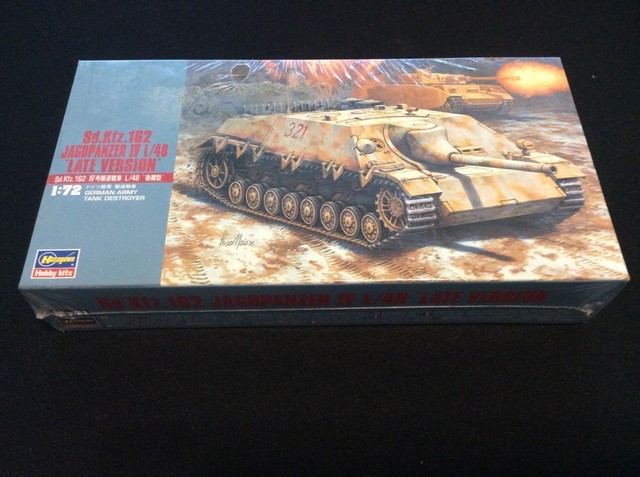
Hasegawa 1/72 Sd.kfz 162 Jagdpanzer IV L/48 Late Version

Continuing my German armour building plans i got my hands on this Jagdpanzer kit from Hasegawa. Again the best Japanese on line hobby shop have this at a great price compared to everywhere else, especially for those of us in Australia! Hasegawa kits just keep surprising me, each new one I build, the more I like them!
https://ssli.ebayimg.com/images/g/HBMAAOSwYHxWHFsB/s-l640.jpg

The Jagdpanzer is another German tank destroyer that i am not sure was used too much in Normandy. I am guessing it was used more on the Eastern front, but i could be wrong. Anyway i wanted to build one and i am sure it will be happy to fit in with my Stugs and Hetzers. The kit comes in the usual Hasegawa grey plastic which is really easy to cut and glue. Wheels are simple and go straight onto the bottom hull. Eight along the bottom and then four return rollers on the top. You need to make sure you keep the lower hull and upper hull separate before painting them and after painting the tracks. The tracks need to go onto the lower hull before gluing the two together otherwise it will be very tricky to get them on. The tracks are the one piece rubbery type so give them a good stretch to make sure they fit OK without straining on the drive and sprocket wheels. You do not want to snap anything off……

The upper hull is pretty straightforward but it does not miss any detail. You have to open a couple of holes and also fill a couple of others. On the front of the hull there is one bigger area to fill which i made a total pigs ear of. I made such a mess with my filler and sanding i had to cover it up with extra track. Great way to cover my mistakes! I also added some more track along the front and the usual washing up brush plastic bristle aerial. If you haven’t tried that yet i suggest getting a $2 washing up brush from Woolworths with plastic bristles. Hey presto, 200 plastic aerials! I was super impressed with the detail and the challenge of this kit. Hatches can be open or closed, and I have a commander in the painting queue soon to be added.

Painting started with an undercoat of matt black followed by dunkelb dark yellow. Then i did a red brown and bright green camo pattern. Gloss varnish, followed by decals and dark brown wash and finally some chipping using a sponge. Its the usual process but i was happy how it all came out. I had also based the tank on 3mm mdf as usual. After a coat or three of matt varnish i used mud, dirt and various weathering powders to create the final dirty finish. The base was completed with tufts and flock and a little static grass.

This kit is excellent and a great balance between a challenging build without being frustrating. For a wargamer i do not think you will find a better version of this tank. I also made some camouflage foliage for the crew to further hide their vehicle so I will detail them in my next post.

More AB Figures British Infantry

I finished up another squad of AB Figures British Infantry this week. I am slowly replacing all my plastic figures with metal ones. The AB ranges are just the best. Not much else to say! There are enough different packs to make up plenty of squads without repeating the same guy twice. The detail is so clear on these figures it makes them a real pleasure to paint. I find that just blocking in the colours and then doing some highlighting is good enough. I did buy a proper set of British Army Uniform colours, shadow, base and highlight, which has helped a lot. Trying to mix a British khaki is really tricky so i stopped trying to do it!

These guys are all based on Australian 10 cent coins which are not only useless for anything else but perfect size for individual bases. If you don’t own any AB Figures in your collection you really need to change that. I pick up all mine from Eureka Miniatures in Melbourne, they have such a great range of World War Two figures, its tempting to keep loading up. Next up i need to paint three PIAT teams to try and finish my British company. Check out my pictures below, i am still struggling to take half decent photos with my phone. Lighting seems to be difficult with small figures.


Sarissa Precision Ruined Houses

In my mission to speed up my village building and supplement my very slow scratch building process, i could not resist buying some more MDF kits. This time from Sarissa at http://www.sarissa-precision.com

I have seen lots of pictures and reviews of the Sarissa French Chateau in 20mm and 28mm scale and I was unable to resist the lure of  purchase. So I figured I better make it worthwhile by buying a couple of their 20mm ruined houses at the same time. The Chateau build is for another time, as I decided to get cracking on the ruins first. The kits come flat packed in two sheets of 3mm MDF with a further sheet of window and door fittings in card. At less than $15 Australian a pop they are pretty good value. The best thing is Sarissa does the postage from the UK to Australia at two pounds fifty which is amazing. Definitely makes me want to buy more!

The parts pop out of their sheets easily and consist of a floor or two, walls and roof sections. The roof sections have a triangular support that gives the structure some strength. So all you need is some PVA glue and bobs your uncle. Once you have the structure made you can add the windows and shutters, door frames and doors. You do need to think ahead about what you are going to paint before you finish building as it might be tricky to paint some bits after full construction.

Now i really like these kits but did need to add some of my own bits and pieces just to get them up to speed. Firstly its very obvious where the MDF corners are, so i used my gyprock plaster to give my buildings a texture, before i added the details. This covered up the joins and created a more interesting surface. I also could not quite understand the chimney construction, maybe i did it wrong, so i also had to add some MDF to line everything up. The chimney pots i cut off and replaced with some excellent metal ones i had bought from a model shop, which i think was a good improvement. I also added my own cardboard roof tiles onto the roof remains which give more texture to the roof than the original flat MDF. I also added textured bricks carved into the plaster along the bottom of the walls and also bits of rubble and debris inside the damaged walls. It was a lot of fun to customize these little buildings, but i think they would come out nicely whether you choose to do this or not.

Painting took me a while and i just used basic acrylics. I added a couple of French signs to the sides and then added some black and brown chalk dust to the damaged bits to give the finished result a burnt out look. I am looking forward to building the Chateau now after these two. If  you need some quick and easy buildings with a lot of scope to customize then go and check out Sarissa. You can see below how well they fit in with one of my home made buildings – the blue two storey house with a big blown in the middle of it…..


“Objective Saint-Lo” by George Bernage

Anyone with an interest in the Normandy landings would be keenly interested in the action around Saint Lo that happened in June and July of 1944. This book, published by Pen And Sword, who kindly provided me with a copy, goes through day by day accounts of the action. Beginning at Omaha beach it gives various accounts of the American and German actions from there up to the attacks on Saint Lo. George Bernage has collected actual first hand notes from various people who were actually involved as well as his own version of events.

From a factual point of view this book has lots of information, including a lot of maps and a lot of details of units involved in each engagement. So if you want to find out factual information regarding this period then this is a source. Trouble is i found things very difficult to follow throughout the whole book. The text does not flow and the story is often lost as there is no linked narrative that takes the reader easily through the story. I often found myself lost in facts and lists and had no clue where we were. Even when first hand accounts are directly quoted i sometimes found it difficult to place them in context of the overall story. Adding to the confusion are the maps which quite often are very difficult to interpret. Maybe i am being harsh but i found this book very tricky to read and follow exactly what was going  on. As a bunch of individual tales and events from around St Lo it is a informative book. As a story with a beginning, middle and an end, and a feeling at the end of satisfaction that your story is complete, this book fails.

As a bunch of information, historical facts, unit details, first hand accounts of events that happened at that time, plus maps of all the areas involved for reference, this book succeeds. Its a bit like someone making a scrap book with all sorts of relevant information and not really linking them all up together. The abundant photographs are fantastic and well worth having a look at. I think if i want to recreate any engagements from this part of the war on my battlefield this book will come in very useful. But from an enjoyable and exciting reading perspective it misses the mark.

IMAG1103

AB Figures British Infantry WW2

I finished another squad of the fantastic AB Figures British Infantry. I get these from Eureka Miniatures in Melbourne and what fine figures they are. Easily my favourite metal World War Two range out there. They have a wide selection which covers infantry, support, artillery and tank crews. Everything you could possibly need. The sculpting and detail are just amazing. It makes them very easy and a great pleasure to paint.

I have two more squads of these guys to paint up. Plus some other British i bought from CP Models and SHQ miniatures. Slowly phasing out my plastic squads as i am leaning towards metal being a better choice for painting and wargaming. Will do a comparison on those figures when i get to painting them up.

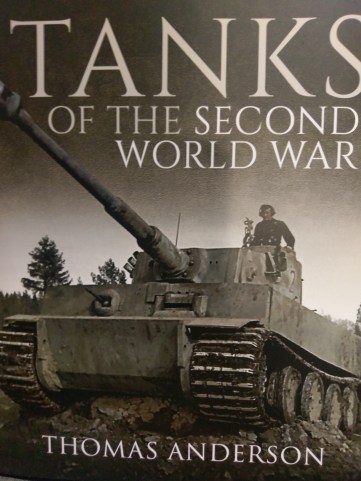
Tanks Of The Second World War by Thomas Anderson

IMAG0794

Let’s face it we all love our tanks. I love building tanks, painting tanks, moving tanks around a wargames table, and also reading about tanks. From the imposing Tiger tank on the front cover i was immediately hooked and swiftly read this awesome volume from the top of its turret to the bottom of its tracks.

The first thing you notice are the abundant black and white photos of every kind of tracked armoured fighting vehicle. Every page has original images of vehicles in combat or lying wrecked on the battlefield. Accompanying the photos are specifications of each tank including armour, armament and speed. I figured these stats would be especially handy if i wanted to design my own wargames rules as they would supply all the relative information needed to come up with each tanks characteristics and abilities. All the photos are a great source of inspiration for anyone with an interest in tanks.

Mr Anderson begins with a brief history of tanks in World War One and the inter war years. He then goes through a chronological history of World War Two and how tanks developed in their design in each period. There is just enough text to accompany the photos to keep you engaged but not bore you with unnecessary information. The book is also grouped by theatre of war, as each had its own impact on the development and use of the tank. Some countries developed their tanks at different times and in different ways depending on how they were involved. Its all fascinating reading. He finishes by briefly touching on tank development after the war and onto the Cold War.

If you have an interest in tanks this book is for you. I would have like maybe some colour plates, plans or illustrations showing camouflage schemes or dimensions, but that would be my only criticism. Lots of great pictures, precise technical info and well written concise historical text. This is a must for anyone with a healthy appetite for a wider understanding of how the tank developed through the Second World War.


IBG Models Chevrolet C15A No.13 Cab in 1/72 scale

IBG 72015 1/72 Chevrolet C15A No.13 Cab Australian Pattern Wirel

These kits from Polish company IBG are just always a total pleasure to build. This is only my second truck from their range but i it was just as awesome as the first one. They come packed in a way oversize box with just a couple of sprues. Detail is great and the kit goes together very nicely with no issues. You don’t get any crew so i added my usual driver from AB figures. Always remember to build and paint the interior of the cab before putting on the roof and the driver in. I have made this mistake before……

Not much else to say. I really enjoyed making this kit. if you want a good range of smaller trucks then look no further than IBG. I painted mine in standard olive green and added some dirt and dust and mud. Great fun. They have some very cool looking US trucks too which i want to get my hands on. You always need trucks and plenty of them. Some lucky officer will get to swan around in this baby.


Trumpeter Jagdpanther in 1/72 scale

Trumpeter produce a huge range of 1/72 scale tanks and vehicles and where i am in Australia they are very affordable and easy to find. Only $10 a pop from my www.hobbyeasy.com, which i think is just great value. The Jagdpanther is a very cool tank and although not used in great numbers in Normandy i still really wanted to build one.

Previously i had built some Jagdpanthers from the English company Armourfast, but to be honest, this Trumpeter kit is 100% far and away totally better in every department. The kit is quite a simple build. The running gear goes together quickly with a couple of dozen wheels. I left the vinyl/rubber tracks off so i could paint them separately before attaching them to the tank later. The hull of the tank has plenty of great detail to add including spare tracks on each side, plus it has schurzen plates to add if you like. On this version i decided to leave them off so you can see the running gear more clearly. Some good decals are provided, with two different choices of numbers for the side of the tank.

I painted this by hand in a usual three colour camouflage scheme, but tried a brighter camo green than i normally use. I also tried some new techniques and products I hadn’t tried before. Firstly i bought some MIG products washes for British and German tanks. Normally i just use some raw/burnt umber mixed with a touch of black for a wash. I gave the tank a gloss varnish after finishing the camo scheme and then gave it a wash with the MIG wash for German vehicles. What a difference! I would recommend grabbing some of these as the effect is so much better than just the regular paint wash i was using.

I also tried some chipping weathering effects with a sponge that i had read about. This worked quite well with a contrasting paint colour to my tanks paintwork (i used burnt umber and raw umber mainly). I made sure i didn’t over do it. Also after reading a tutorial by Piers Brand on how he uses weathering powders on tanks i decided i wanted to try them out too. So another trip to BNA Model World, i bought a bunch of weathering powders, again from MIG, and used them on the tracks and running gear. Using them sparingly and keeping the effects subtle they certainly improve the look of the vehicle.

So i was very happy with the new techniques and products i tried this week. You can see the results in my finished Jagdpanther below.

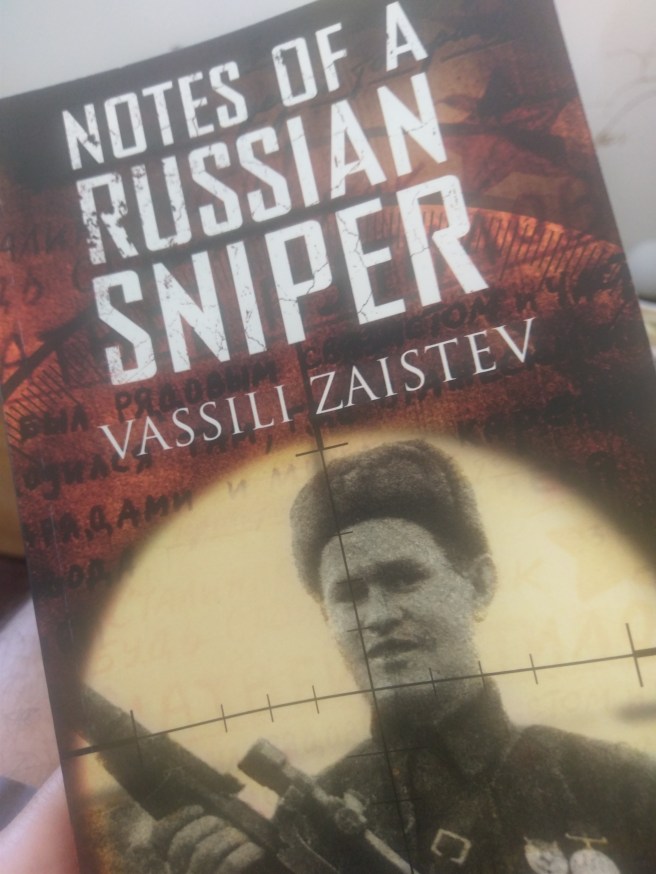
Notes Of A Russian Sniper by Vassili Zaistev

IMAG0536

Another fine book from Pen and Sword Publishing in the UK. I think they made a movie out of this a few years ago. Its the true story of Vassili Zaistev and his role as the greatest Russian sniper in the battle for Stalingrad. From humble beginnings in the Urals hunting animals he becomes the most famous sniper accounting for a reported 242 German scalps.

It is a great, first hand account of the house to house, factory to factory, close quarters fighting of Stalingrad and the role of the sniper in that fierce and bloody conflict. Vassili goes into detail about sniper tactics and how he learned his art through the rubble and twisted metal of a devastated city. If you are modelling or gaming any part of the Stalingrad period this would be a good book for you for inspiration and information. You get a very real impression of how the fighting occurred and what sort of engagements were fought. Snipers had a crucial role in the city and could swing a battle in their favour.

I think i will have to search out the movie now and watch it again after reading this. Overall an excellent read and one you can certainly whizz through in a few days.

Assault on Camembert June 9th 1944

As the British moved forward from the Normandy beaches they managed to grab some small towns ahead of the main invasion force. One of these small towns is a little known hamlet called Camembert, on the road to Rochefort. A worn down British Company from the 17th Durham Light Infantry had taken the German forces by surprise and were just holding on by the skin of their teeth. Colonel Frank Mustard was occupying the town with two platoons of infantry, a couple of Cromwells and a Firefly as armour, plus a 17 pdr and a battery of 80mm mortars. In reserve he had the lumbering Churchill AVRE which was fresh from blowing up some Normandy beach defences. So not an insignificant force. Colonel Mustard had orders to hold Camembert against a possible German counterattack.

Just down the road through the bocage the counterattack was inevitably coming. A much bigger German force was on the way including one troop of Panthers, a troop of Panzer IVs, a company of Panzer Grenadiers, an 88mm and some Pak40 AT guns, plus a dangerous Tiger in support. So outnumbered and outgunned the British had their work cut out to hold on. The British plan was to try and destroy some German armour on the main roads leading to the village and block them up, then bring in mortar fire to further mess up the forces and pin them down.

It all started so well as the Firefly took out the lead Panther on the West road and blocked it up, while the 17pdr stalled the Tiger rolling down the East road. That was as good as it got for the Brits. The mortars never found their range and basically did nothing allowing the Germans to continue to advance. The remaining three Panthers got through the bocage and made very light work of the Firefly and his Cromwell friends. Then once the Tiger survived three direct hits from the 17pdr it took one big shot from close range to destroy the doomed anti tank gun. By this time the reserve Churchill AVRE has spent 5 moves moving about three inches and was already too late

Suddenly the Panthers and the Tiger were in the village. The Brits had no answers to the big cats and Colonel Mustard threw in the towel. So a decisive German victory i think. Next time the British need to be more alert and get those mortars firing early to have any chance. Plus be a bit smarter with some ambush tactics rather than just exposing themselves to the enemy so easily.